The Other Half of DFW

Source: Texas Signals — aggregate county data.
Fort Worth is not Dallas's suburb. It is a distinct metro of 1 million+ people with its own economic drivers, housing dynamics, and investment characteristics. Yet most DFW real estate coverage — and most investor attention — focuses on Dallas County. This creates an information gap that Fort Worth-focused investors can exploit.
Fort Worth's Economic Base
Defense and Aerospace
Lockheed Martin's Fort Worth facility employs approximately 17,000 workers and is the primary production site for the F-35 Lightning II. The federal defense budget provides a floor under Fort Worth's economy that does not exist in most Texas metros.
Medical District
The Fort Worth Medical District near TCU is expanding significantly, with new hospital construction and medical office development. Healthcare jobs provide stable, above-median incomes that support consistent rental demand.
Distribution and Logistics
The AllianceTexas development in north Fort Worth has created one of the largest inland logistics hubs in the country. BNSF Railway's intermodal facility, Amazon distribution centers, and FedEx Ground operations collectively employ tens of thousands.
Investment Data
Pre-Foreclosure Trends
Tarrant County pre-foreclosure filings track closely with Dallas County in absolute numbers, but Fort Worth's lower property values mean the equity-to-debt ratios are often more favorable for investors. A pre-foreclosure on a $250,000 Fort Worth property with $180,000 in debt offers more margin than a $450,000 Dallas property with $380,000 in debt.
Rental Market Fundamentals
Fort Worth's rent-to-price ratio consistently exceeds Dallas by 15-25%. A $250,000 investment property in a good Fort Worth neighborhood rents for $1,800-$2,200/month. The same rent in Dallas requires a $300,000-$375,000 property.
New Construction
Fort Worth's growth corridors — particularly northwest Fort Worth (Walsh Ranch, Aledo ISD), south Fort Worth (Mansfield, Crowley), and northeast (North Richland Hills, Haltom City) — are seeing significant new construction. Permit data from these areas helps investors understand where supply is being added and at what price points.
Neighborhood Analysis
Near Southside (76104)
Fort Worth's version of Dallas's Bishop Arts. The Near Southside has been in active revitalization for a decade, with the Magnolia Avenue corridor as the anchor. Investment properties here benefit from proximity to downtown, TCU, and the Medical District.
Fairmount (76104)
One of Fort Worth's oldest residential neighborhoods, Fairmount offers historic properties at accessible prices. The historic designation creates both opportunity (renovation tax credits) and constraint (design standards compliance).
Riverside (76111, 76103)
The Trinity River corridor east of downtown is Fort Worth's most speculative play. Long-term plans call for mixed-use development and trail connectivity, but the timeline is uncertain. Current prices reflect this uncertainty, offering low entry points for patient investors.
Stop Six (76119)
Stop Six has received significant public investment through the City of Fort Worth's SPARC initiative. Infrastructure improvements, new affordable housing, and community development create a foundation for long-term appreciation, though the timeline is measured in years rather than quarters.
West 7th / Cultural District (76107)
The established premium neighborhood near the Kimbell Art Museum and Modern Art Museum. Entry prices are high, but rental demand from young professionals working downtown is consistent. This is a cash flow play rather than a value-add opportunity.
The Fort Worth Thesis
Fort Worth offers what Dallas increasingly does not: entry points that support positive cash flow on day one. The defense employment base provides economic stability. The medical district expansion is adding high-income jobs. And the logistics sector ensures sustained working-class employment that drives rental demand at moderate price points.
For investors who prioritize yield over appreciation, Fort Worth may be the stronger choice in 2026.
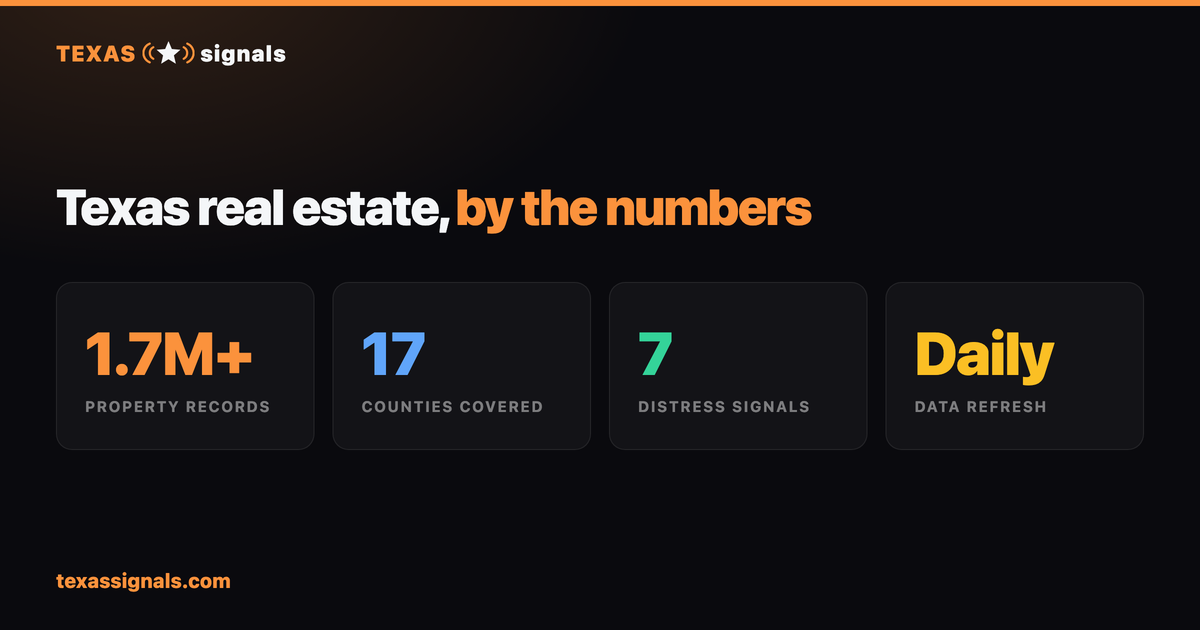
Source: Texas Signals — aggregate county data.
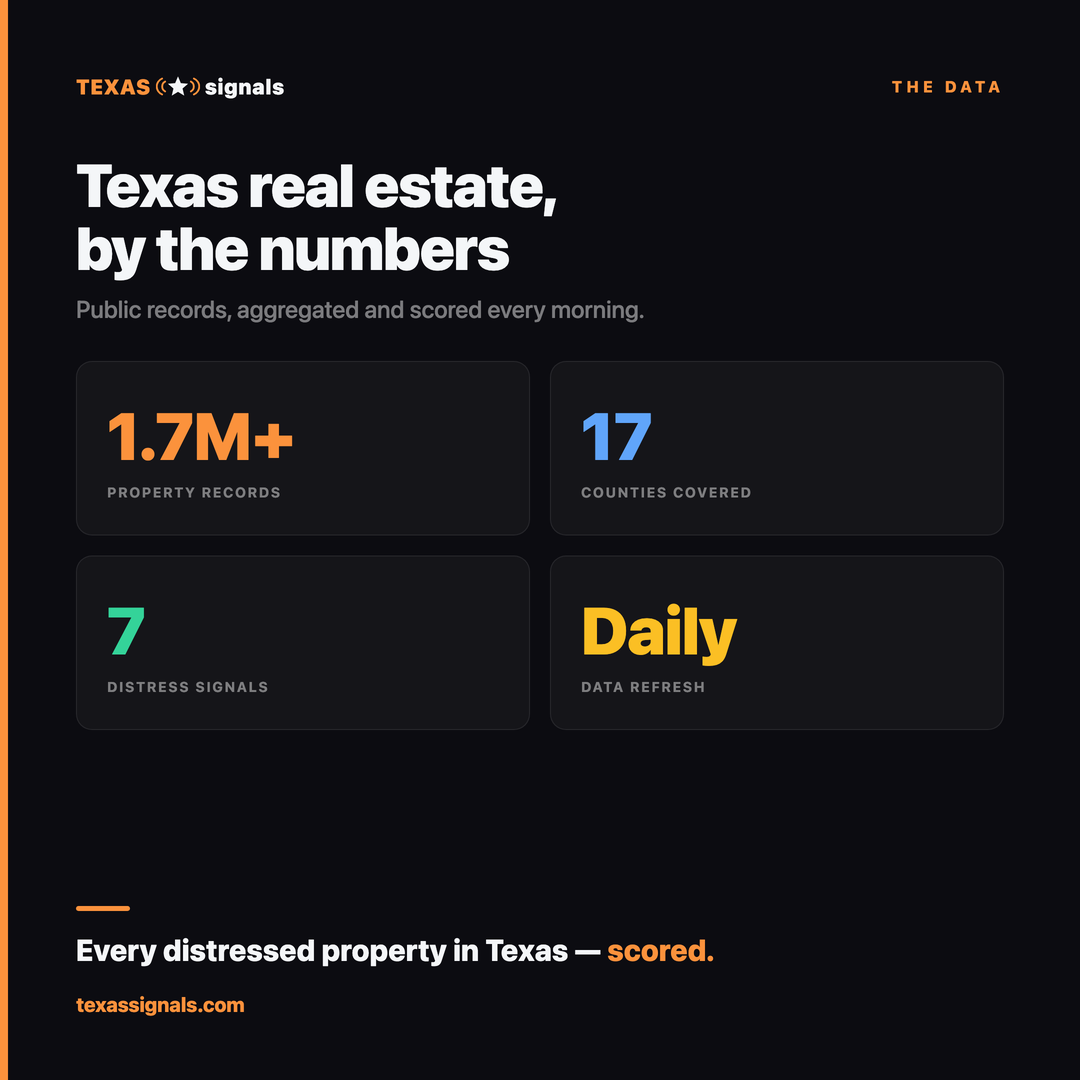
Source: Texas Signals — aggregate county data.
Texas Signals tracks property data across both Dallas and Tarrant Counties. Compare investment opportunities across DFW at texassignals.com.