Code Violations as Investment Intelligence

Source: Texas Signals — aggregate county data.
Most investors ignore code violation data. That is a mistake. Bexar County's 132,834 code violation records represent one of the most actionable datasets available for identifying motivated sellers, neighborhood transitions, and below-market acquisition opportunities.
How Code Violations Create Motivated Sellers
When a property receives a code violation, the owner faces a choice: invest money to fix the issue, or sell the property. For owners who are already under financial pressure — delinquent on taxes, behind on mortgage payments, or simply tired of a rental property — a code violation is often the final catalyst that moves them from passive to active seller.
The most actionable violation categories:
Structural Violations
Roof damage, foundation issues, or structural deficiencies that require expensive remediation. Owners receiving structural violation notices face repair costs that can exceed $20,000-$50,000. These owners have the highest probability of accepting a below-market offer.
Overgrowth and Maintenance
While individually minor, chronic maintenance violations (overgrown lots, debris, abandoned vehicles) indicate an owner who has disengaged from the property. These are often absentee owners who may be willing to sell simply to eliminate the hassle.
Occupancy and Zoning
Properties cited for illegal occupancy configurations or zoning violations often belong to owners who were attempting to maximize rental income through non-compliant modifications. When enforcement catches up, the investment thesis collapses.
Geographic Patterns in Bexar County
West Side (78207, 78228)
The highest concentration of code violations per housing unit. Many violations relate to aging housing stock and deferred maintenance. This area also overlaps with active gentrification pressure from the nearby Pearl District and Tobin Hill.
East Side (78202, 78220)
East San Antonio's violation density reflects decades of underinvestment, but the pattern is changing. Increasing violation enforcement in these ZIP codes signals that the city is investing in neighborhood standards — a leading indicator of property value increases.
South Side (78214, 78221)
Military-adjacent neighborhoods with moderate violation rates. Many violations here relate to rental property maintenance, as investor-owned properties near Lackland AFB and Fort Sam Houston sometimes receive less attention than the rental income would justify.
The Overlap Strategy
The most powerful use of code violation data is cross-referencing with other distress signals:
•Code violation + tax delinquent = Very high probability motivated seller
•Code violation + pre-foreclosure = Owner under maximum pressure
•Code violation + absentee owner = Classic neglected investment property
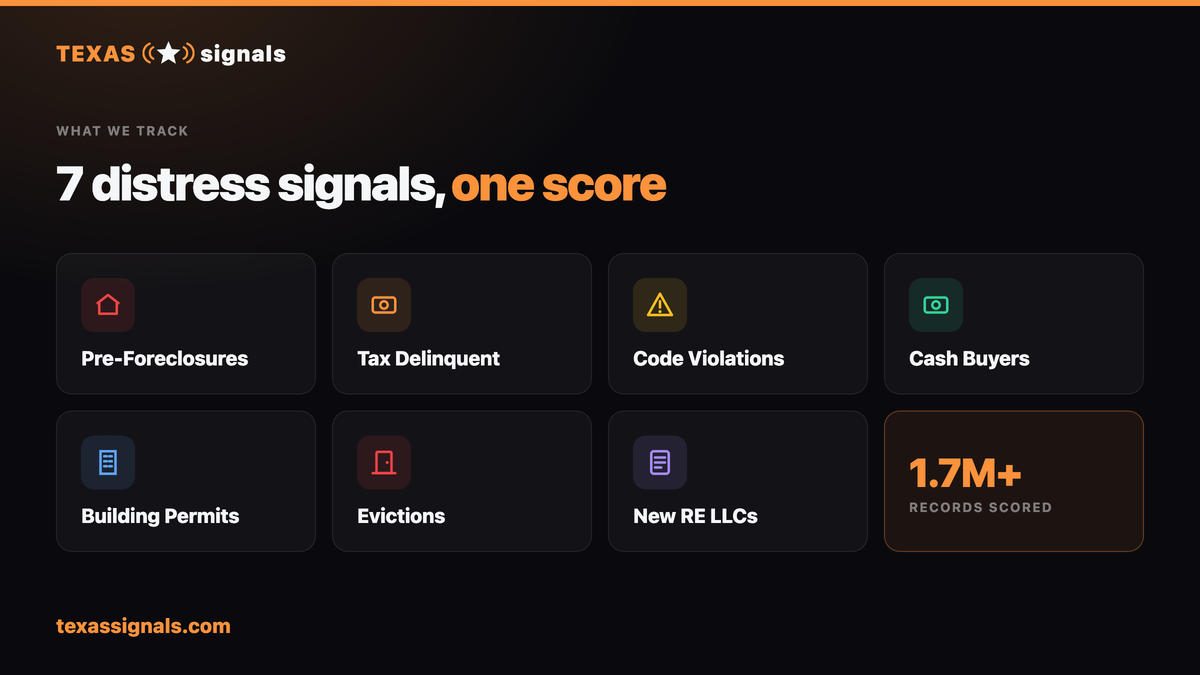
Texas Signals makes these cross-references easy by tracking all data types for every address in the database.
Timing Your Approach
Code violations have deadlines. From the date of notice, the owner typically has 30-90 days to achieve compliance. The optimal window for investor contact is 15-45 days after the violation notice, when the owner has had time to digest the situation but has not yet invested in repairs.
Source: Texas Signals — aggregate county data.
Source: Texas Signals — aggregate county data.
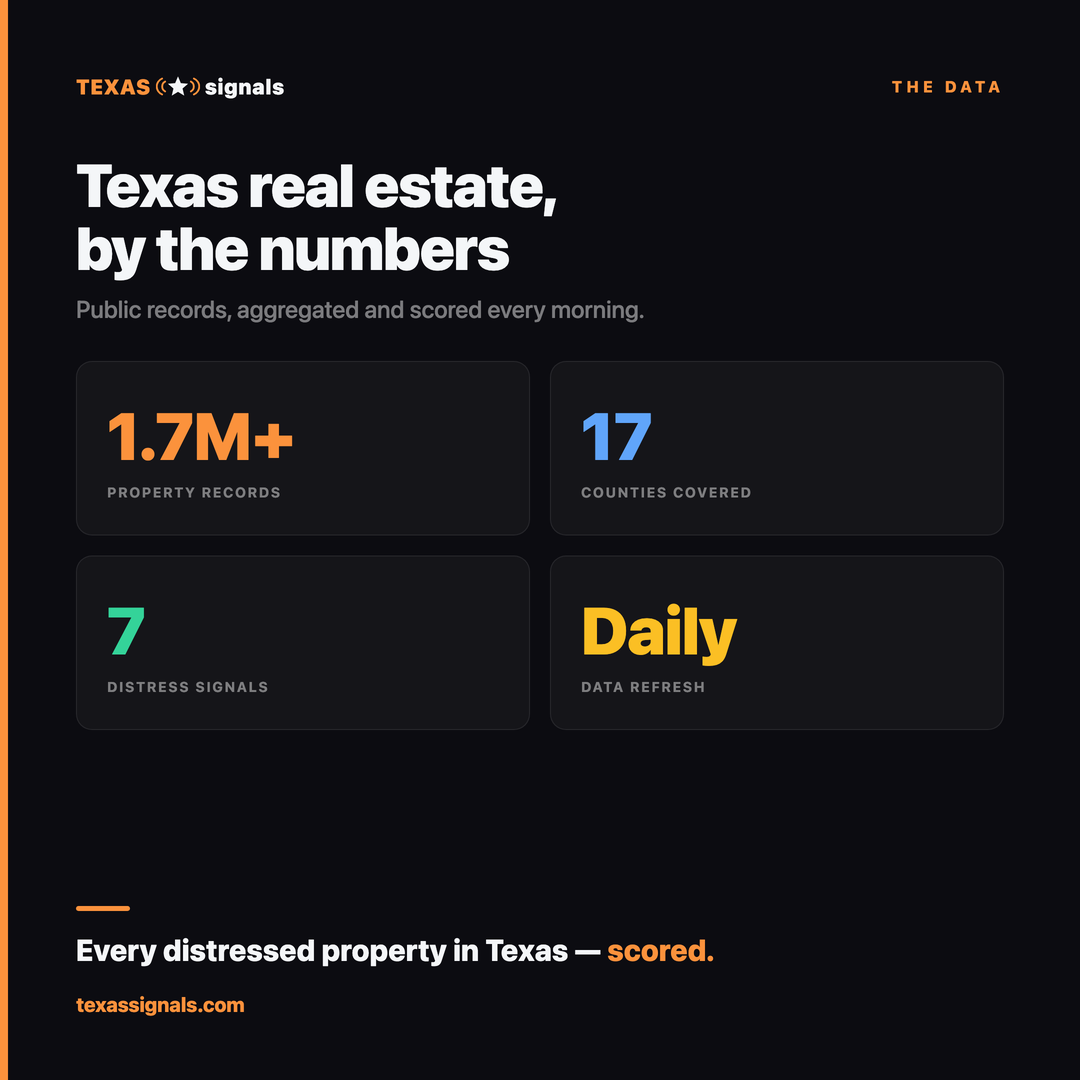
Texas Signals tracks every code violation in Bexar County alongside pre-foreclosures, tax delinquencies, and cash buyer activity. Subscribe at texassignals.com.